There seems to be this attitude in America that education starts in the classroom at school with the start of preschool or kindergarten. I cannot express how inaccurate and devastating this belief is to children’s academic and emotional growth. Education starts the moment children enter into the world. That means that education starts at home with the parents. If parents fail to educate and invest in their children at an early age, not only will they be significantly behind in their cognitive and academic development, they will be in a constant state of catchup for a large portion of their life. With that said, Parents, education starts with you!
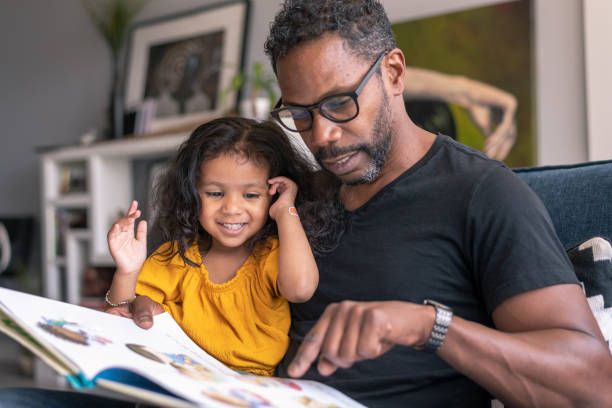
“From birth to age 3, children have roughly 15,000 hours of learning opportunities. Whether these hours are filled with language, or left empty, makes an extraordinary difference to children’s development” (Risely, Ramey, & Washington, 2006). In the first 3 years of life, children have the best opportunity to learn and grow. At the age of two, a child’s brain goes through a development spurt called a critical period. At two years of age, a child’s brain has twice as many synapses as adults. “Twice as many synapses enable the brain to learn faster than at any other time of life” (Sriram, 2020). The learning development that happens during this time will have a significant impact on a child’s overall development throughout their childhood and adolescence. The more learning opportunities provided at younger ages, the more synapses take place and build stronger connections in cognitive development.
Reread the quote Risely, Ramey and Washington. “From birth to age 3, children have roughly 15,000 hours of learning opportunities.” Notice the word “Opportunities”. Opportunities are actions or activities that are intentionally taken. This is why we can “miss opportunities” in our life. If we do not intentionally take opportunities afforded us, we miss out on the potential benefits those missed opportunities could have brought. When children are young, pre-school age, parents have the opportunity to build strong cognitive and academic foundations in their children. If parents do not take the opportunity and invest in their children’s learning, then parents are setting their children up for failure when they enter school.
“Parent talk is the most powerful tool for building children’s brains and sending them to school ready to learn” (Suskind, 2014). When my wife and I had our first child, the amount of talking and reading that we did with her helped her grow in her abilities to read and write at an exponential level. My oldest is now ten years old, and she is reading large chapter books and even writing her own books. I truly believe that she would not be at the academic or cognitive level that she is now without the valuable time we spent reading and talking with her. We have done the same with our other three children, and they too have high levels of cognitive and academic development. From someone who knows the value of spending time and taking the opportunity to teach my children at an early age, I can attest that it creates and establishes a foundation for learning.

With the increase of technology and hands on devices, the amount of interaction that takes place between parents and children have significantly dropped since before the ease of access to technology. This should be alarming to everyone. MIT professor Sherry Turkle states in her book, Alone Together, that parents become more distracted and less present in their children’s lives because of their mobile devices. When the overwhelming responsibilities start to take a toll on the lives of parents, parents tend to escape through technology. This, in turn, alienates their children and removes the opportunities for learning for young children. This is why it is essential that parents learn to disconnect from their technology and reconnect with their children.
A parent’s responsibility is to their children first and to their self last. This is not a very popular opinion among many parents. However, the reality is parents have a responsibility to their children. It is the parents responsibility to invest in their children, to teach their children, to provide learning opportunities for their children, and much more. As a parent of four with a full-time job and extra side jobs, I know how hard it can be to want to engage with your children when you get home. You’re tired, you’re beat, you’re worn out. I get it! But let us never neglect the opportunity and responsibility we have in engaging with our children and helping them build foundations that will support their emotional and academic learning.
Parents, disconnect from your technology and reconnect with your children. Do not wait until your child starts school to start building foundations in learning. The earlier you provide learning opportunities, the better. Don’t set your child up for failure because you failed to engage with them in learning opportunities. Make it a daily routine to sit down and engage with your child. Talk with them, read to them, involve them in projects around the house. Do not waste the 15,000 hours of learning opportunities that could help build a solid academic foundation for your child. After all, the education of your child starts with you!
References:
Risley, T., Ramey, S., and Washington J. Webcast: From Babbling to Books: Building Pre-Reading Skills. http://www.readingrockests.org/webcast/1002
Sriram, R., June 4, 2020. Why Ages 2-7 Matter So Much for Brain Development. https://www.edutopia.org/article/why-ages-2-7-matter-so-much-brain-development
Suskind, D. January 30, 2014. Thirty Million Words. https://leader.pubs.asha.org/do/10.1044/thirty-million-words/full/
Turkle, S. (2011). Alone together: Why we expect more from technology and less from each other. Basic Books.


This is a great reminder of the importance of parents’ role in their children’s education and development. My question is, what are some specific activities or strategies that parents can use to provide learning opportunities for their young children at home?
P. Tinting
https://blog.primarytinting.net
LikeLike
Hi, P. Tinting.
Thank you for the comment and great question. The first thing that comes to my mind when thinking of your question is to set aside time to read to your child. Some of my favorite memories with my children are having them snuggle up with me and go through picture books where I ask them to find things in the book. As they got older, it turned in into reading chapter books with them as they listened – this is where we are at currently. There is tremendous power in sitting and reading with your children.
Secondly, as parents, we need to learn to play again. Sitting on the floor and playing games is a great way to encourage learning while having fun. Something, I can’t stand about myself right now is my lack of imagination. Watching my children come up with plays, building with Legos, and creating an imaginary world is awesome to me. It reminds me of what is most important, and that I need to break away from the mundane adulting in life and learn to play and have fun with my children.
Finally, talk with your children. If given the opportunity, children will talk your ear off, but they have to see that you are invested and wanting to listen. Instead of “How was your day?”, ask more open ended questions. “What did you do today?” “What was your favorite part of the day and why?” When we invest into our children, they will be more willing to open up and share what’s on their mind. For parents of younger children, babies and toddlers, making silly noises, talking in repetitive sentences, teaching them simple words, etc. is a great way to engage with them and start that learning process. Here is a great Ted Talk on exactly what I am saying: https://youtu.be/aISXCw0Pi94
I hope this answers your question. Thank you again for commenting and reading the blog.
LikeLike