
We tend to overcomplicate learning and education. We also think that learning is some linear process that needs to fit within a certain time frame. The truth is that learning is nothing more than habit-forming actions. We learn by doing, but if we only do something once or twice, we will never really know or understand what we are doing. Learning is multifaceted in that we must incorporate multiple actions to gain knowledge and understanding, the most important being the action of doing. In other words, the more we do something, the better we get at it.

Have you ever heard of “The Rule of 100”? The Rule of 100 states, “If you spend 100 hours a year, which is 18 minutes a day – in any discipline, you’ll be better than 95% of the world in that discipline.” Sports players who are at the top of their game and are considered the “GOAT” (greatest of all time) reached this level with a Rule of 100 mentality. Hard-working individuals who are the best at what they do in a specific industry or selector are that way because of the Rule of 100 mentality. What can we learn from these kinds of people? To be the best at something, we must practice – A LOT! The more they practiced, the better they got.
Why don’t we see learning the same way? We have created an education system that is linear and not multifaceted. Students are placed into grades based on age and must learn specific grade-level concepts. We create lessons based on content units, curriculum maps, and calendars. We teach concepts one after the other with some practice in between. Ultimately, we care more about getting through content than we do with providing a learning environment focused on practice. There is no wonder why our students are struggling in specific content areas. We aren’t providing them with ample time to practice and get better at concepts.

Whenever students start to get a new concept, we move on to something new. We then neglect reviewing concepts, which means whatever students were just taught becomes lost. Learning happens through consistency. If we are not providing our students with consistent time to practice, how can we expect our students to retain information for a longer period of time? What we need to do is stop worrying about getting through content and start focusing on solidifying concepts through meaningful and intentional practice.
When it comes to my students, I focus on teaching them the process of doing something. Everything has a process – reading has a process, math has a process, writing has a process, and even giving presentations has a process. The process is what matters. In math, numbers will always change, but if my students know the process to complete a problem, the numbers don’t matter. In reading, the books and words will change all the time, but if my students have the fundamentals of reading, then they will be successful readers. Once I teach my students the process, we practice that process over and over. I want my students to know the process as well as they know their own name. If all I did was teach the process, give a day or two for practice, and then teach a new process, my students would never become fluid in what I teach them. The more time I give my students to practice, the better they become. I do not allow time to factor into what I need to teach.
Most teachers follow curriculum maps when teaching in their classrooms. I don’t. I don’t care about time frames or what needs to be done by what time. I focus on the standards and determine, based on my students’ needs, what I most need to focus on. Everything I do follows a common sense path. If my students are strong in a certain concept, I move on to the next new concept. If I see my students are struggling, I stay with that concept, provide ample amount of practice time, and move on when I see my students are ready. I do not wait for 100% of my class to have a solid foundation in the concepts I am teaching. I wait till 80-90% of my class is proficient, knowing that the 10% that are still struggling will have more time to practice through interventions, review problems, and use of their resources. Time is never a factor in what I need to teach and when I need to teach it.
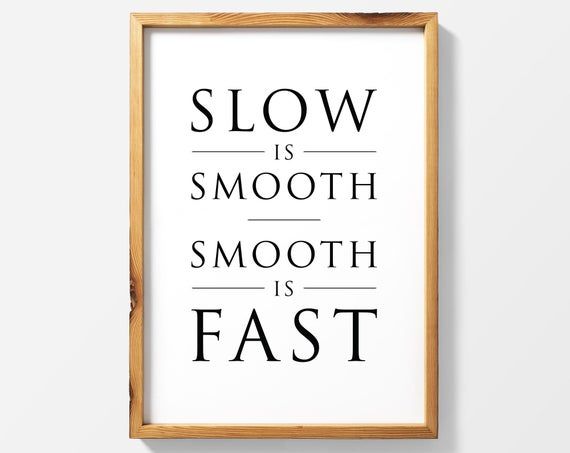
The classroom should be a flexible space, just like learning should be flexible. Learning doesn’t happen overnight. It happens through trial and error and practice and consistency. The Navy SEALs have a great phrase that they base their training and combat operations: “Slow is smooth. Smooth is fast.” When I slow down for my students, they retain more information, gain a better understanding of concepts and processes, and build stronger connections between different academic standards. In the classroom, I teach my students to follow this valuable lesson in their work. Our students, for some dumb reason, are told to rush through work and get things done. The best example of this is elementary reading. The focus is on their reading speed rather than the actual process or concept of reading. This creates students who make multiple mistakes, have very little understanding of concepts, and don’t know what to do when they fail.
The classroom should be where students can try, fail, grow, and become better. The only way that happens is with practice and time. Our students deserve the opportunity to become great at learning. We need to encourage the “Rule of 100” in our classroom. The more practice we provide our students, the better they become. If we focus too much on time, curriculum maps, and schedules, we rob them of precious, valuable time to build a solid academic foundation. After all, the more they do something, the better they will get at it.
 Welcome To The Classroom